Introduction
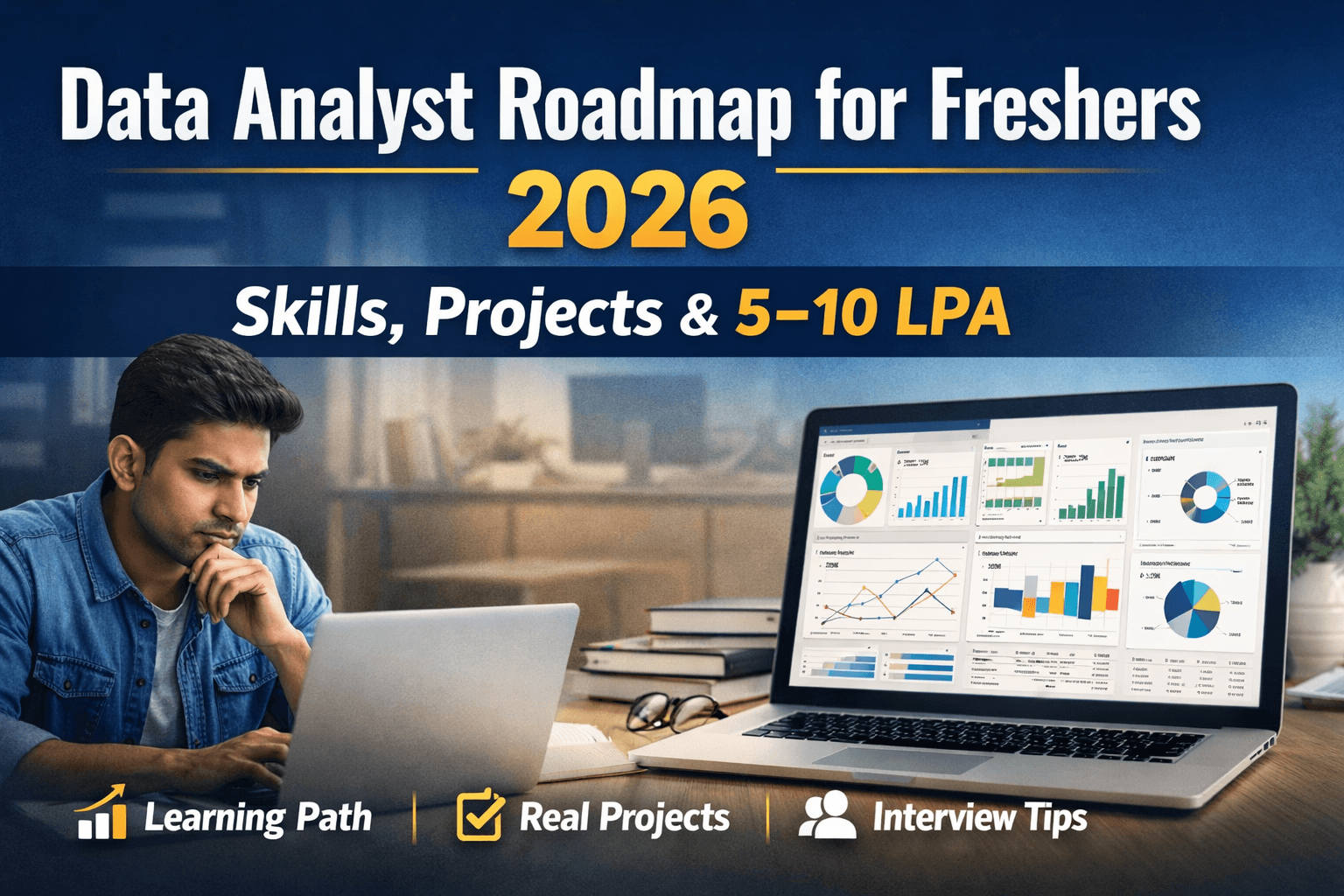
Data analyst roadmap for freshers 2026
This guide will help you understand the data analyst roadmap for freshers, ensuring you are well-prepared for your career.
When someone says “Data Analyst salary,” most freshers immediately think,
“I’ll probably start with 3 or 4 LPA.”
That’s not wrong — but that’s also not the full picture.
Following the data analyst roadmap for freshers will enhance your skills and boost your job prospects.
The data analyst roadmap for freshers is structured to provide clarity and direction.
The truth is, higher packages like 5 to 10 LPA are not about luck, referrals, or expensive courses.
They are about how well you prepare, what projects you build, and how clearly you explain your work.
By following the data analyst roadmap for freshers, you can set realistic expectations.
This post is written for freshers who want to prepare the right way, without confusion or unrealistic expectations.
First, Let’s Be Honest About Salaries
No company pays 5–10 LPA just because you completed a degree or watched a few tutorials.
Higher packages are usually offered when:
- You are strong in core skills
- You can solve real problems using data
- You can clearly explain what you did and why
This is exactly what this roadmap focuses on.
Understanding the data analyst roadmap for freshers can significantly impact your career trajectory.
How Companies Decide Your Package
Most interviews don’t start with salary discussions.
They start with questions like:
- “Explain one project you worked on”
- “Why did you use this approach?”
- “What insights did you find?”
Candidates who answer these confidently automatically stand out.
Your skills + projects + communication decide your package — not just your resume keywords.
The Right Roadmap Mindset
The data analyst roadmap for freshers is essential to grasp before pursuing advanced topics.
Before tools and courses, you need the right mindset.
Instead of asking:
❌ “How fast can I get a high salary?”
Ask:
✅ “How can I become job-ready and valuable?”
When you focus on value, salary follows naturally.
Ultimately, the data analyst roadmap for freshers will guide your learning and development.
Phase 1: Strong Foundations (Weeks 1–2)
At this stage, don’t rush into advanced tools.

Focus on:
- Understanding what a Data Analyst actually does
- How businesses use data to make decisions
- Basic statistics like averages, percentages, and trends
This phase builds your thinking, not your resume — and that matters a lot.
Phase 2: Excel + SQL (Weeks 3–8)
This will enhance your understanding of the data analyst roadmap for freshers.
This phase is non-negotiable.
Excel and SQL are still used daily in most analyst roles.
This is the foundation of the data analyst roadmap for freshers, which you will build upon as you progress.
You should be comfortable with:
- Cleaning messy data
- Filtering and grouping information
- Writing clear and readable SQL queries
- Understanding how tables are connected
- For beginners, Microsoft’s official Excel documentation is a reliable place to start.
https://support.microsoft.com/excel
Don’t memorize queries.
Learn why a query works — interviewers care about logic.
Project 1: Sales Performance Analysis
This is usually the first serious project.
What you do:
- Analyze sales data
- Identify top products and regions
- Find monthly or quarterly trends
What interviewers look for:
- Can you explain your findings?
- Can you link numbers to business decisions?
Integrating the data analyst roadmap for freshers into your study plan is crucial for success.
Simple project, but very powerful when explained well.
data analyst roadmap for freshers
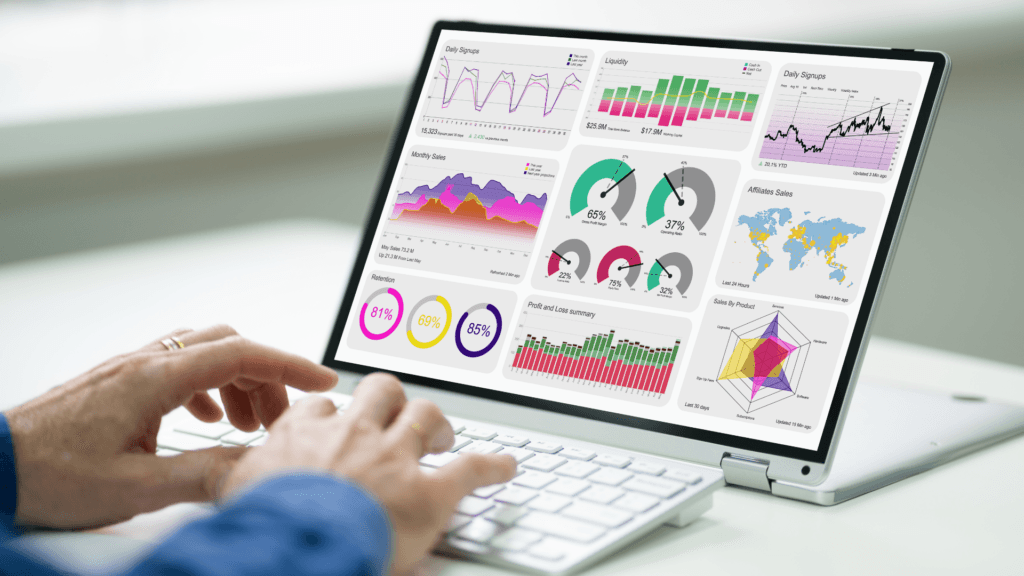
Phase 3: Data Visualization (Weeks 9–12)
At higher-paying roles, analysis alone is not enough.
You must show insights visually.
Learn:
- Power BI or Tableau basics
- How to design clean dashboards
- How to tell a story using charts
The goal is clarity, not fancy visuals.
https://learn.microsoft.com/power-bi
Project 2: Business Dashboard
Here you build:
- KPI dashboards
- Filters for different stakeholders
- Clear summary views
In interviews, this project helps you show:
- Business understanding
- Communication skills
- Attention to detail
Phase 4: Python for Analysis (Weeks 13–16)
Python is not mandatory for all roles, but it adds strong value.

Focus only on what analysts actually use:
Focus on learning the tools outlined in the data analyst roadmap for freshers.
- Pandas for data handling
- Basic data cleaning
- Exploratory analysis
You don’t need advanced coding — clarity is more important.
Project 3: Customer Behavior Analysis
In this project, you:
- Analyze customer data
- Identify patterns like churn or repeat behavior
- Share insights with clear explanations
This project shows maturity and analytical depth.
Phase 5: End-to-End Case Study (Weeks 17–20)
This is what separates average candidates from strong ones.
You take:
Utilizing the data analyst roadmap for freshers will help you stand out in interviews.
- Raw data
- Clean it
- Analyze it
- Visualize insights
- Present conclusions
Interviewers love this because it shows complete ownership.
How This Roadmap Helps You Target 5–10 LPA
Higher packages are not about knowing everything.
They are about:
Completing projects based on the data analyst roadmap for freshers will enhance your portfolio.
- Depth over breadth
- Real projects over certificates
- Clear explanations over complex jargon
This roadmap is designed with that exact goal.
Final Thoughts
You don’t need to rush.
You don’t need to compare yourself with others.
If you follow a clear roadmap, build real projects, and stay consistent,
better opportunities will come naturally.
Focus on becoming a strong Data Analyst — the package will follow.
Disclaimer
This guide is based on real industry expectations and learning paths. Salaries depend on skills, location, and interview performance.
With the data analyst roadmap for freshers, you are setting yourself up for long-term success.
In conclusion, the data analyst roadmap for freshers is a vital resource for any aspiring analyst.
Following the data analyst roadmap for freshers will ensure you are well-prepared for the job market.